What is land residual value? How it pencils an acquisition
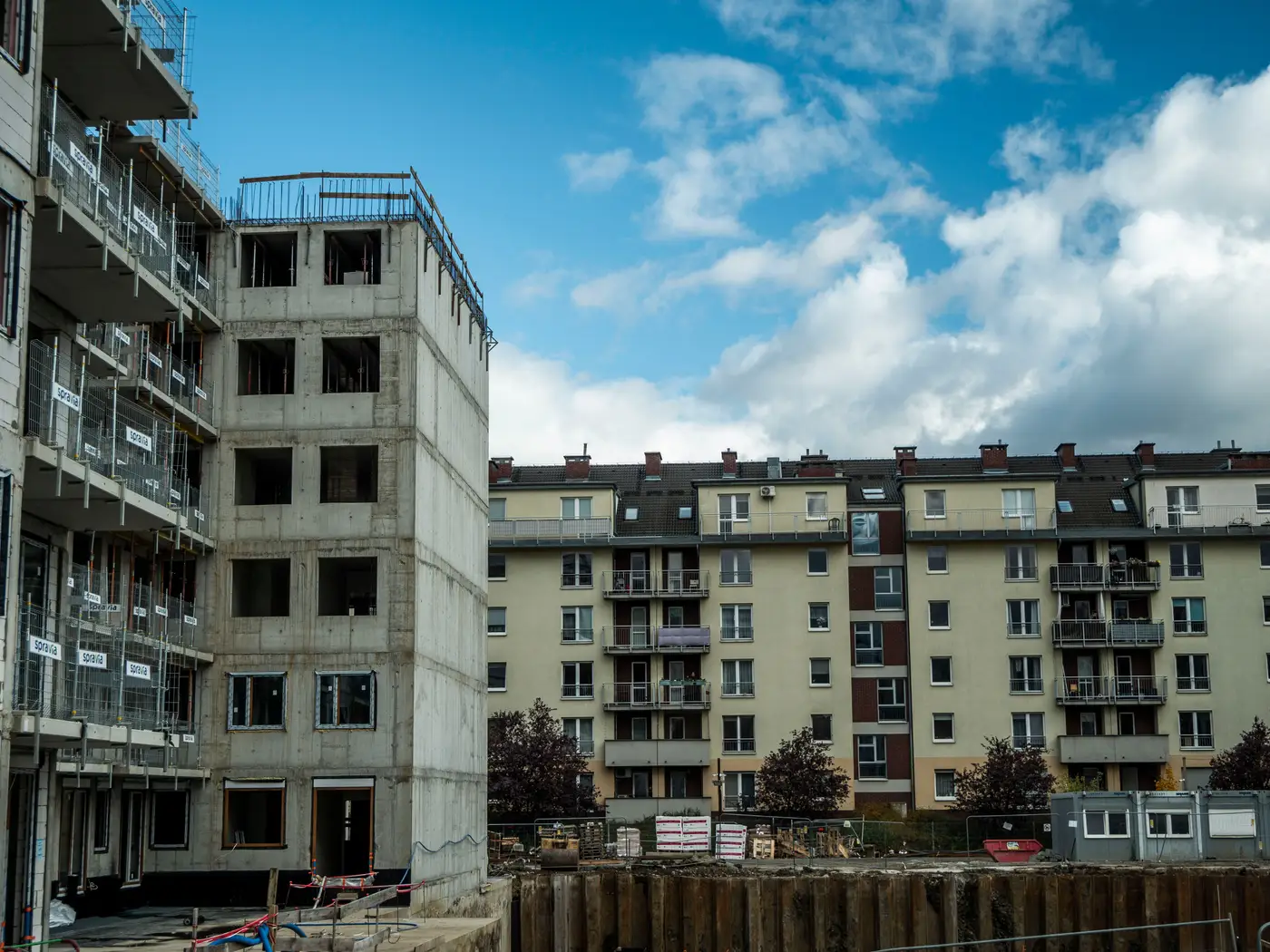
Land residual value is the number you get when you take a project's expected finished value, subtract everything it costs to build and sell it, and call what's left over the most you can pay for the dirt. It's the backbone of acquisition underwriting, and it answers the question a seller's broker asks first: what's it worth to you?
Developers have been running this subtraction for decades. What separates a deal that closes from one that stalls is whether the inputs hold up once you're under contract.
The math behind the number
Start with gross revenue. For a for-sale product, that's units times expected sale price. For income property, it's square footage times expected rent, capitalized at an exit cap rate. From that figure, subtract hard costs (site work, vertical construction), soft costs (design, permitting, financing, insurance), developer profit, and any carry costs tied to how long the parcel sits before it's shovel-ready.
Whatever's left after that subtraction is the residual. That's the ceiling on what you offer, not a target. Pay more than that and the deal doesn't pencil, no matter how clean the site looks from the street.
Where the method gets fragile
Residual value is most sensitive to the inputs an analyst is least sure about this early: exit cap rate, absorption schedule, and construction cost escalation between today and permit-ready. Move the exit cap rate fifty basis points and the residual on a multifamily deal can swing by six figures an acre. That's why most shops run the residual at two or three cap rate and cost scenarios before letting one number drive an LOI.
The other failure mode has nothing to do with the math. The method answers "what should I pay," not "will anyone sell it to me." A parcel can pencil fine on paper and still sit in a family trust that hasn't touched it in a decade, or belong to an owner who isn't selling at any price this cycle. Residual value only matters on parcels you can actually acquire, which is a different question entirely.
Backing into land value across a submarket
Most analysts run this exercise deal by deal: get a broker flyer, run the residual, make an offer or pass, move to the next email. That works fine once you already have a shortlist. It falls apart when the real question is where in a submarket to even start looking.
That's a parcel-finding problem, and it eats the first few weeks of any new submarket assignment: pulling parcel maps, cross-referencing county records, driving blocks to sort which lots are vacant from a surface parking lot someone's holding for later. Development Capacity flags the undeveloped and underused parcels in a built-up area before anyone runs a single residual calculation, so the underwriting starts on a ranked list instead of a blank map.
If the submarket you're screening still has more blank map than shortlist, that's the gap worth closing first.